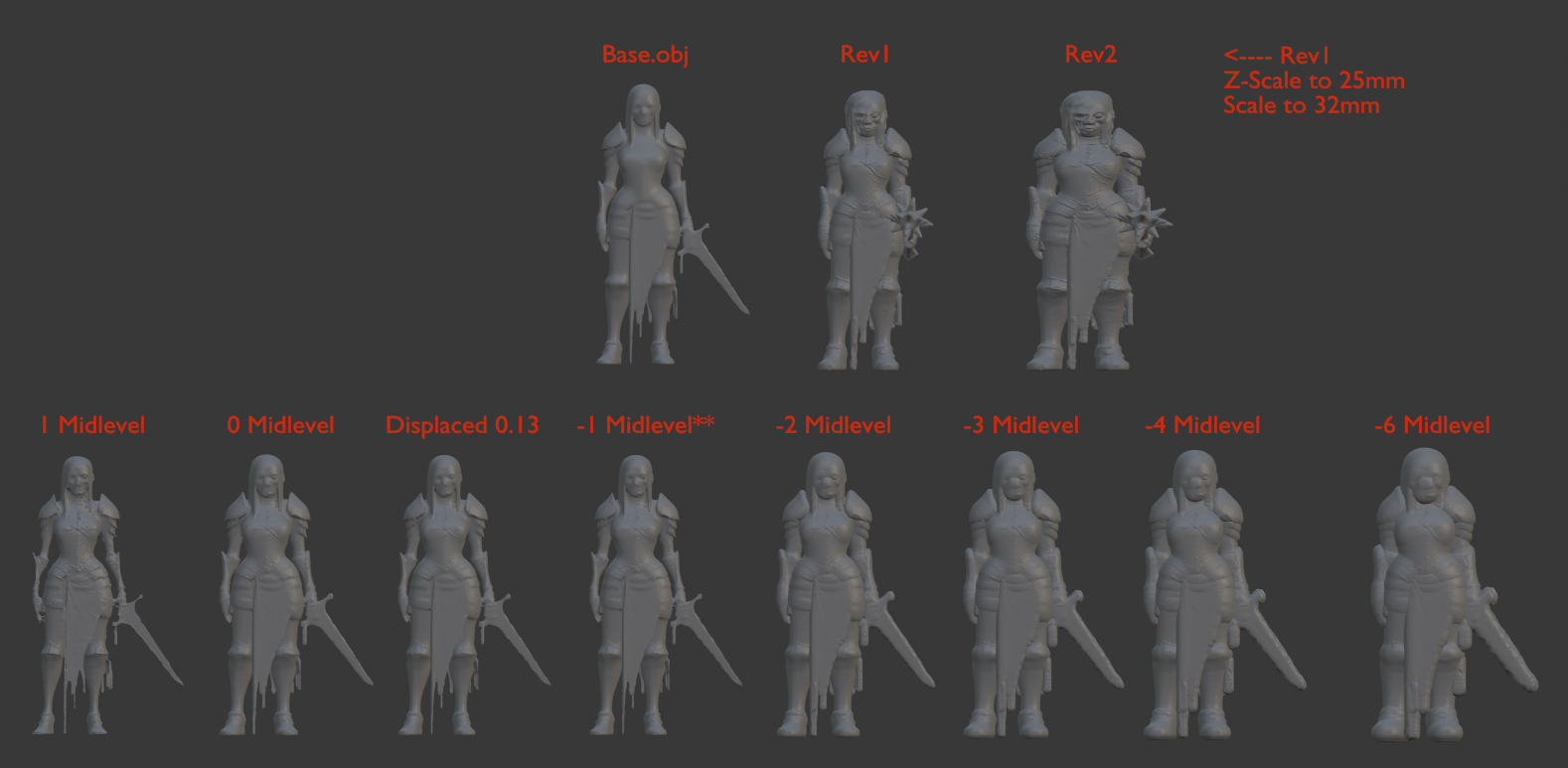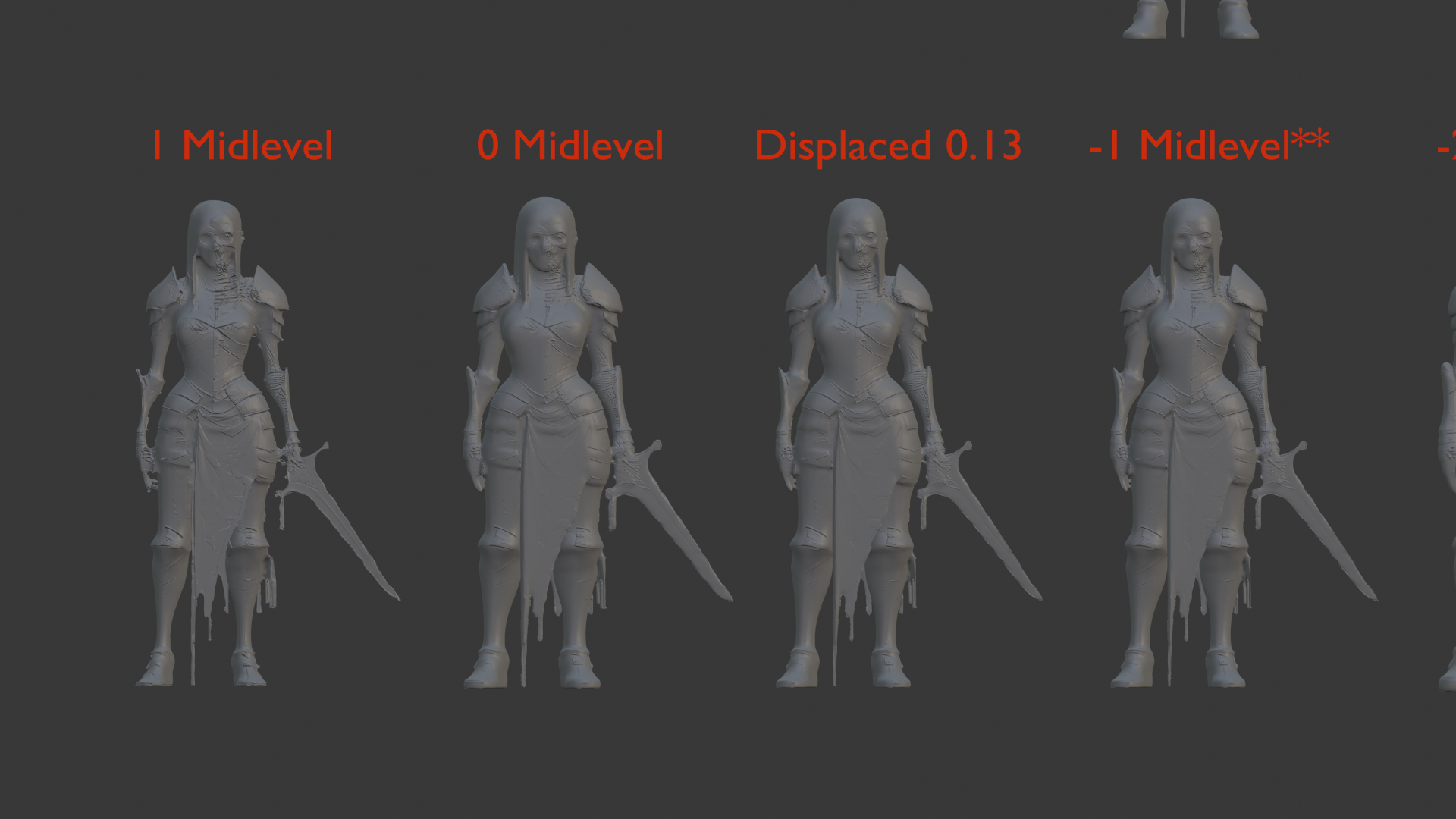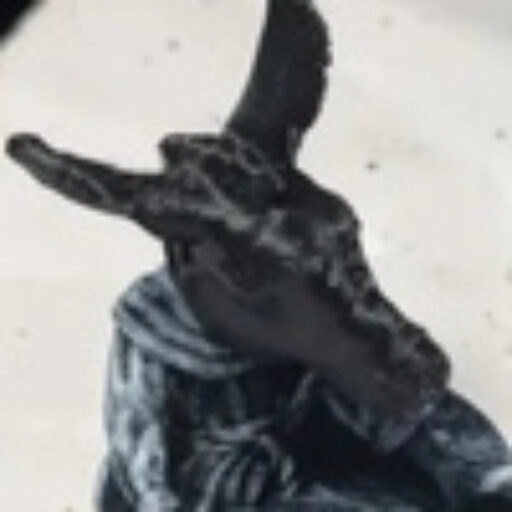
I’ve been playing with workflows for processing these mini-figures outputs for 3d printing. Taking the obj export from Rodin, doing subdivision surface and then doing a UV displace the with shaded.png file at 0.13 strength and -1 midlevel seems to offer the best results.
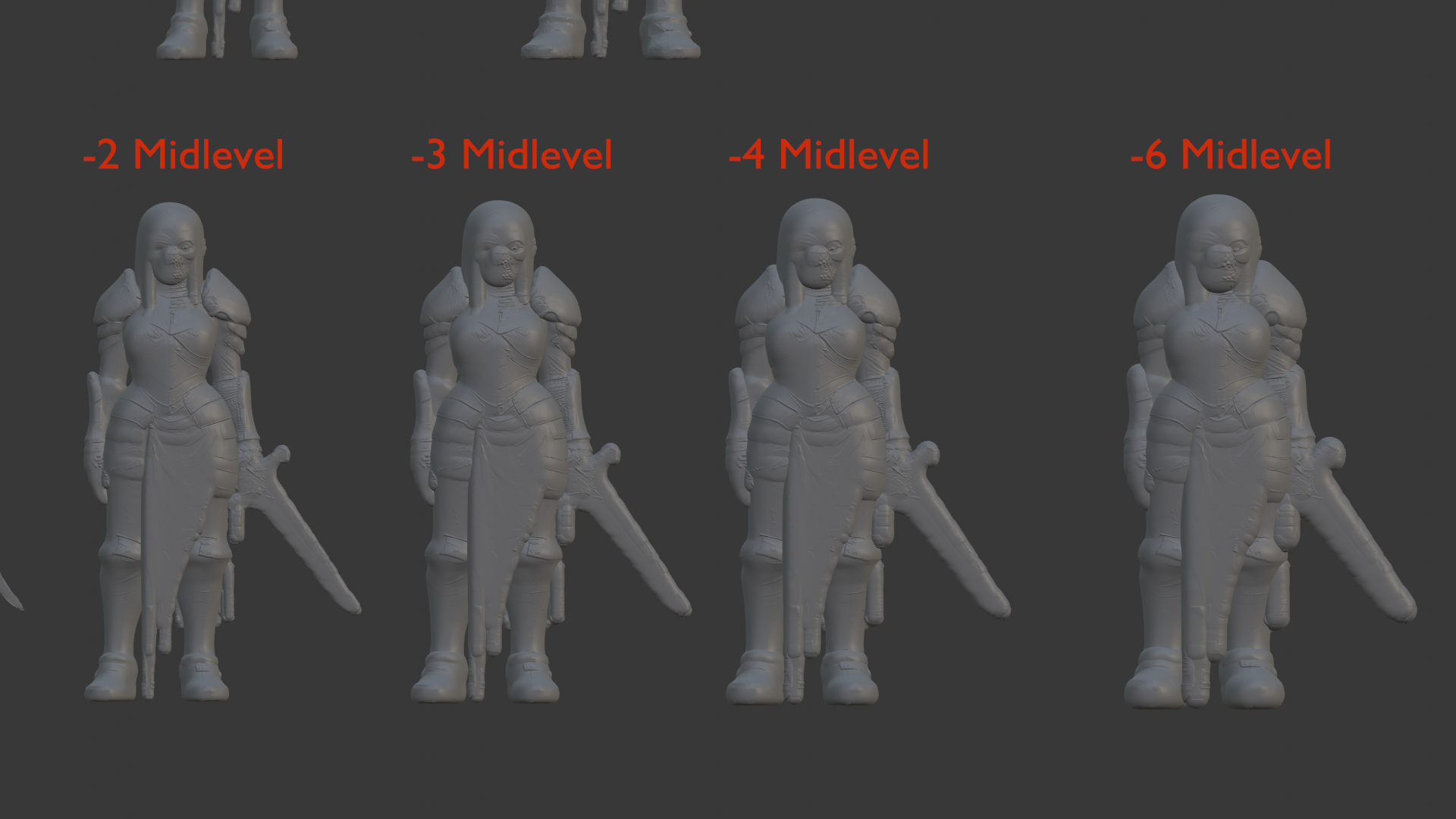
Key considerations seem to be thickness across the model – the obj exports often have wispy thin capes and other artifacts so the negative midlevel (maybe even -2 or -3) help to fix this at the cost of detail.
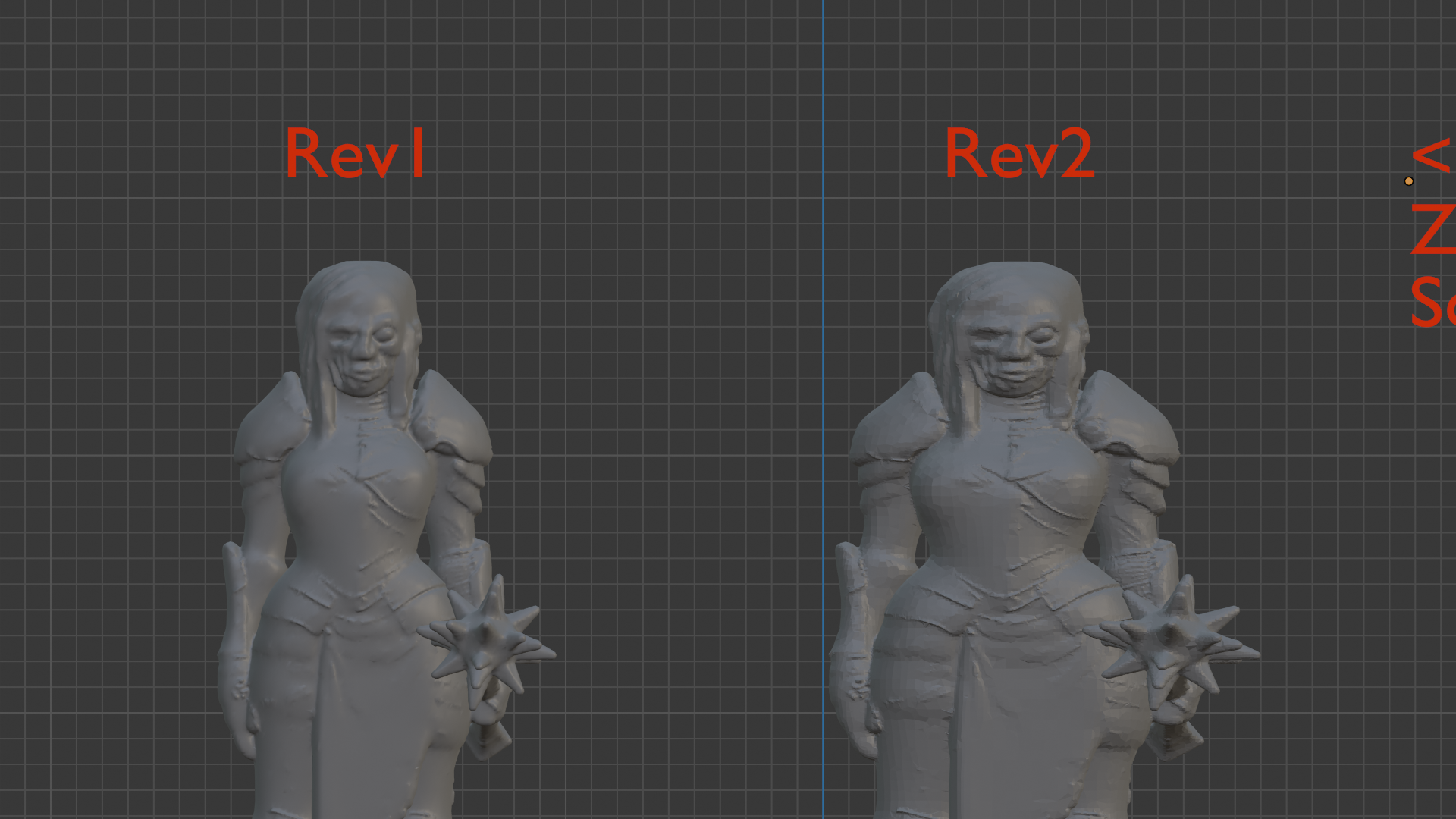
Once applied it needs a remesh but first I do sculpting (as shown in the last image). What I’m finding is that after everything it’s likely best to further crunch the model scaling height down to an arbitrary value (usually 25mm) and then scaling back to 32mm. This further distorts the model but makes it much much much more printable (and less likely to snap apart).
Maybe maybe I can get better results with the alternate Pbr shader export which includes 5 separate files) or maybe it’s better to sculpt the base object instead and ignore the shaders.
For now I think scaling and crunching (distorting) the model is the best approach for printable results.
I have a TON of files in the backlog still and will for ages to come but I want to look at other image gen models aside from Stable Diffusion 3.5 and explore more options for automation. I have a blender extension I may post shortly that helps to quickly take screenshots and resize models to TTRPG scale.